
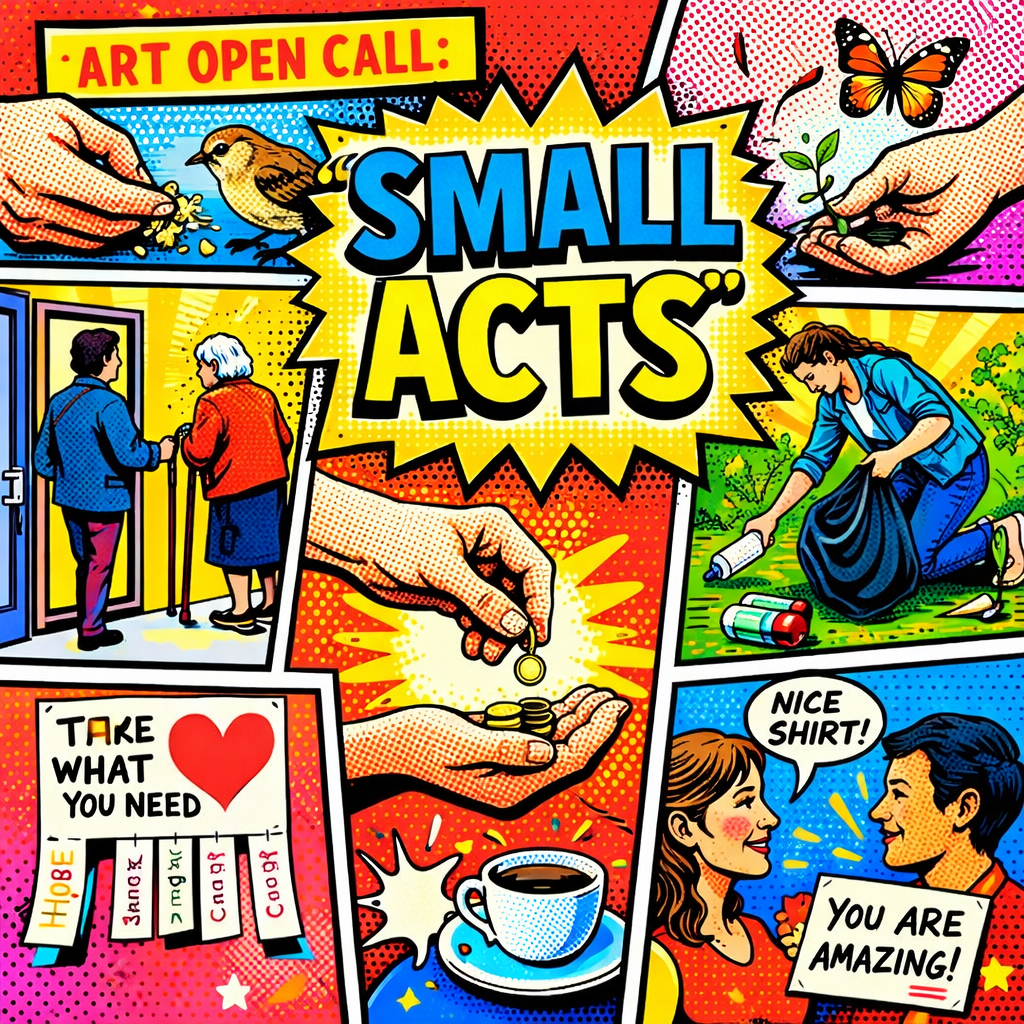
Small acts are often overlooked—quiet gestures, subtle resistances, daily rituals, moments of care, or fleeting decisions that have a ripple effect.
They may be personal or political, intimate or communal, intentional or accidental. Together, these acts shape how we move through the world and how the world changes around us.
This open call seeks artworks and written pieces that explore the power, poetry, complexity and nuance of small acts:
acts of kindness, refusal, repair, or attention; everyday gestures that carry meaning; minor interventions that produce lasting impact; quiet moments that resist spectacle and small acts that have changed your art practice
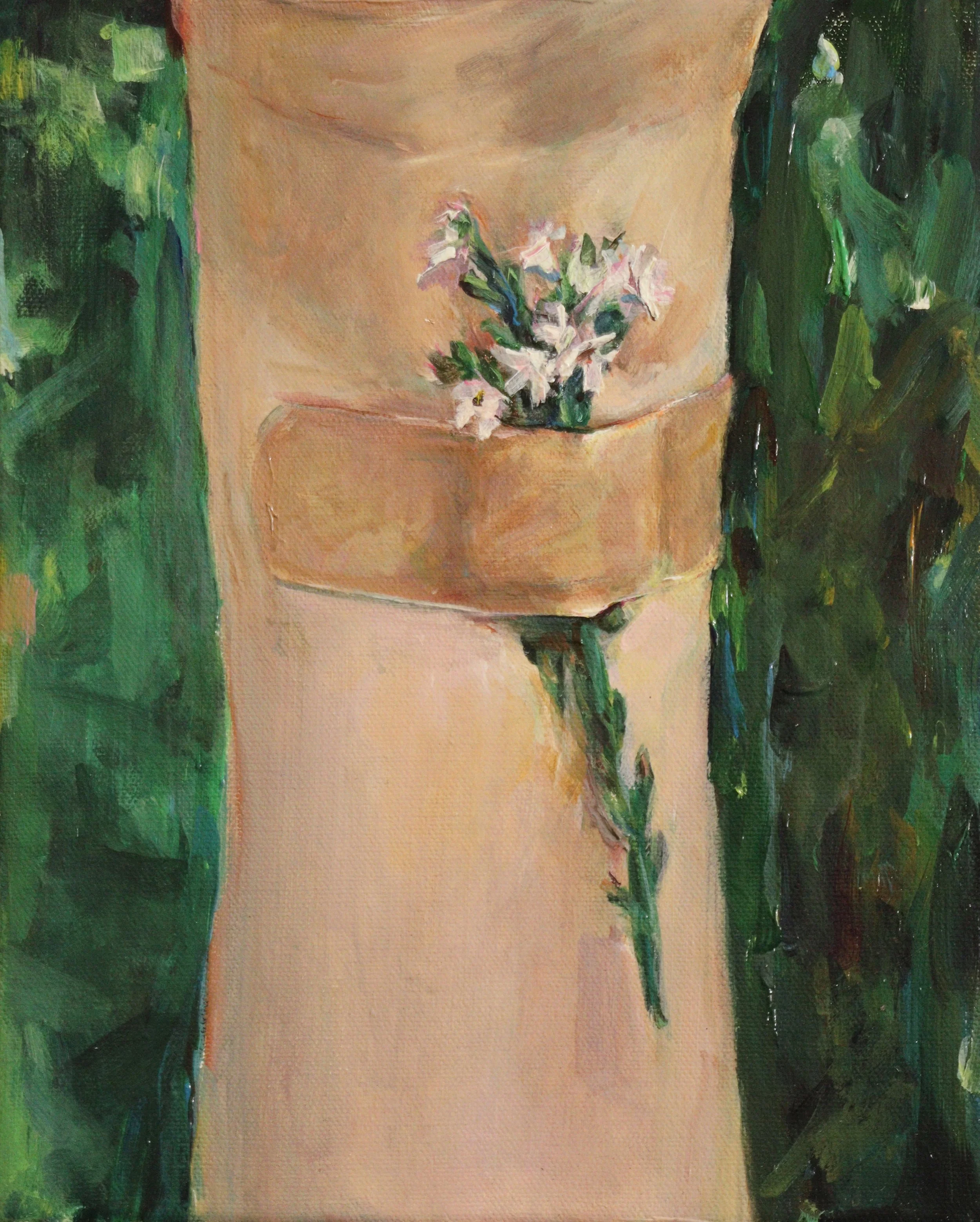
Artist: Hoho Kuo
Spring and Summer as Before.
Description
Time heals all wounds, and in time, may even bring flowers to bloom from them. Yet the true force that nurtures these flowers often springs from the small kindnesses around us—a word of care, a hand extended, a moment of understanding. They arrive softly, yet take root deeply, allowing life in its eternal cycles to remain faithful to a resilient and steadfast heart. Thus, even the gentlest act of kindness becomes a quiet miracle, ever-recurring in the rhythm of life.
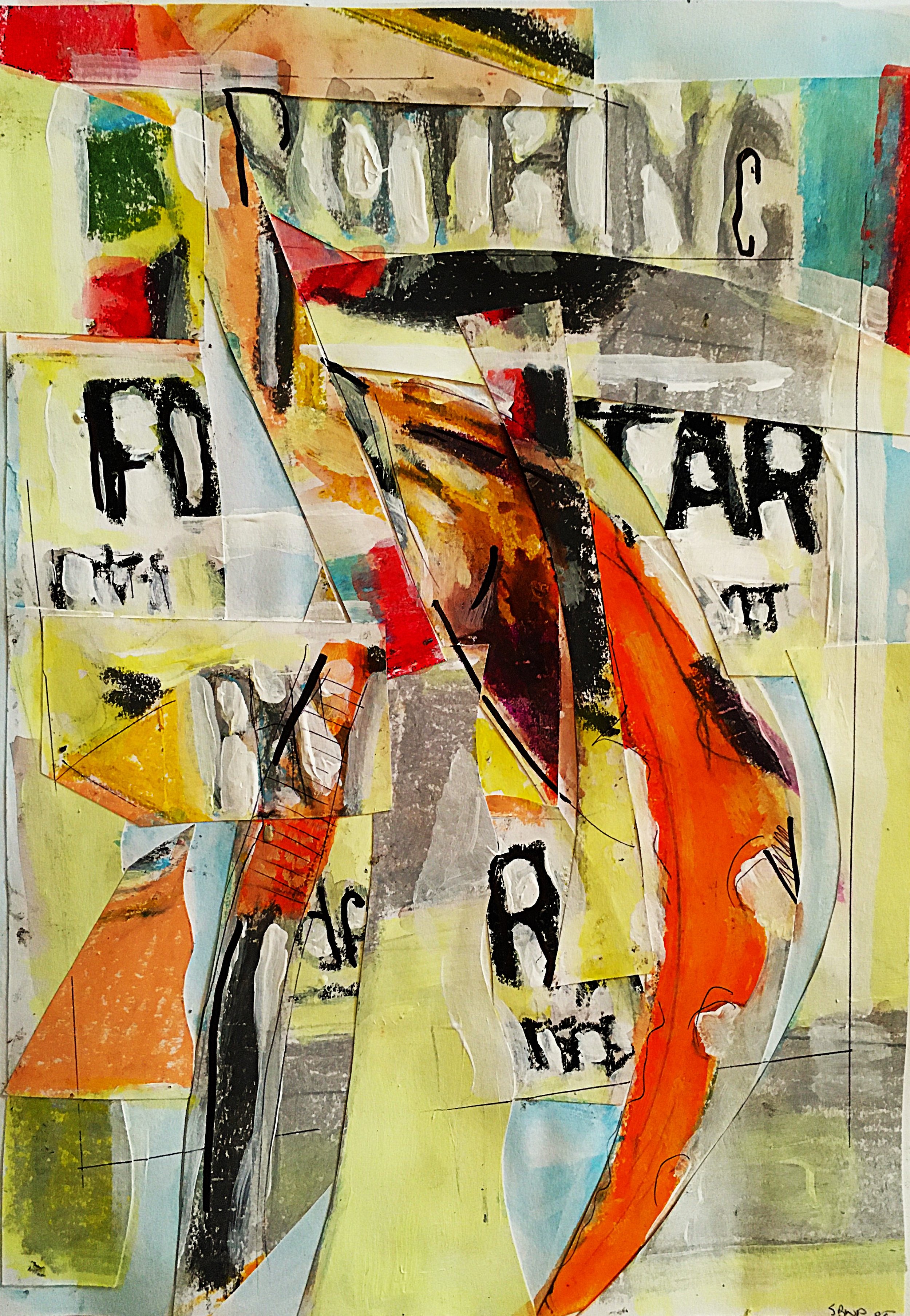
Artist: Sean Bw Parker
https://www.saatchiart.com/en-gb/seanbwparker
https://x.com/seanbwparker
https://uk.linkedin.com/in/seanparker100
Dead Sparrow At DFS (2025)
Description
A dead sparrow was found outside the DFS furniture store in Hove. This is a painting of the photograph. It was painted to immortalise a small life passed.
Artist: Laura Burrill
www.everystitchastory.co.uk
@ _laura_burrill_
Facebook: every stitch a story
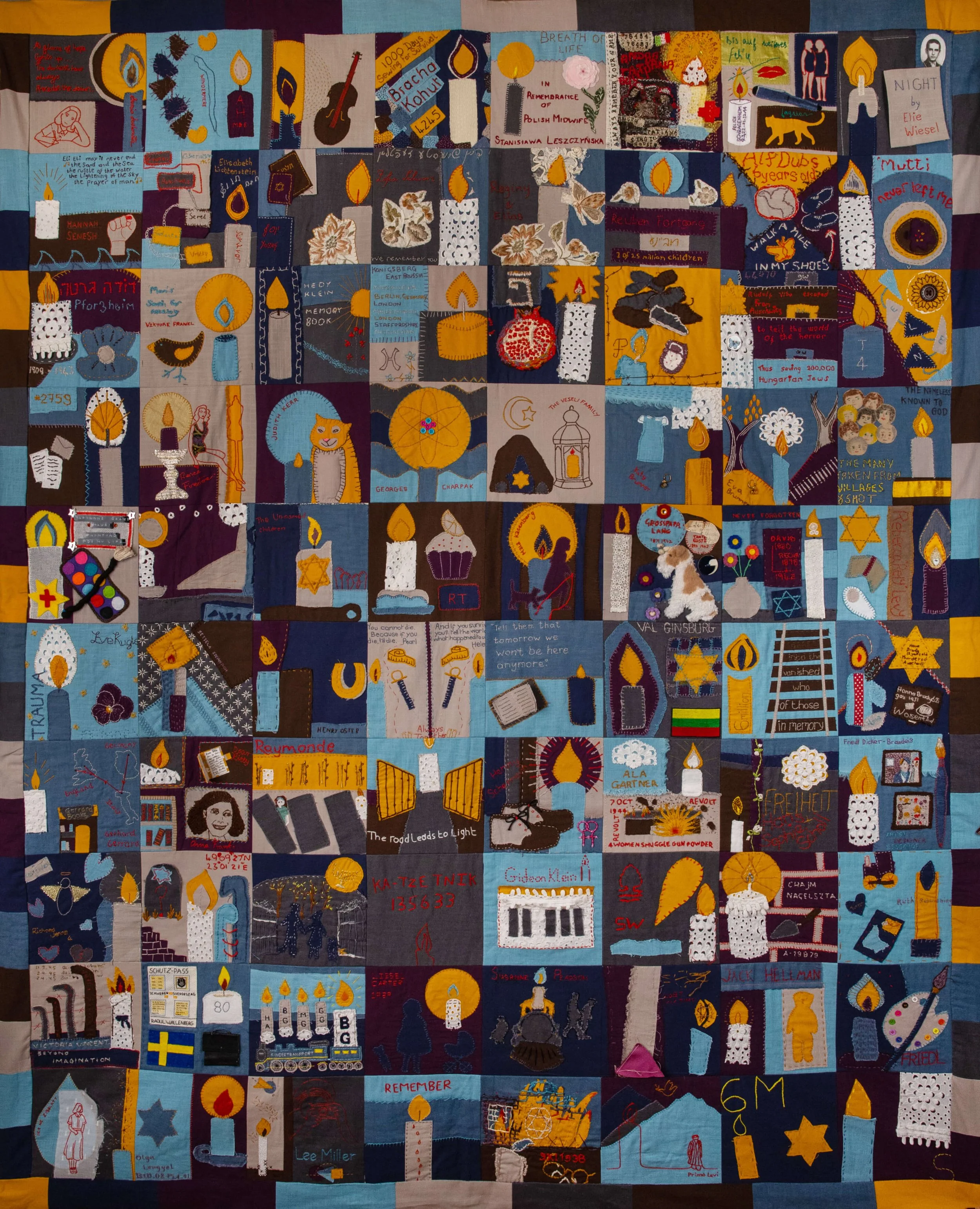
The 80 Candles Quilt
Description: The 80 Candles Quilt is built entirely from small acts: of attention, remembrance, care, and connection. Each stitched square begins with a quiet decision by an individual participant to pause, research one human story, and honour that life through slow, mindful hand stitching. These gestures are modest in scale, yet together they form a collective act of resistance to forgetting. The project responds directly to the call’s focus on everyday gestures that carry meaning and minor interventions that produce lasting impact. A single candle square is a small act — one person, one story, one stitched flame. But when 80 of these squares are assembled into a quilt, the cumulative effect becomes profound. The work demonstrates how small, tender actions can ripple outward, transforming private moments of care into a shared public memorial. The quilt also embodies quiet resistance to spectacle. It does not rely on shock or scale to communicate loss. Instead, it invites viewers to slow down, to look closely, and to engage with the humanity of each person represented. Each square is intentionally intimate, encouraging the viewer to encounter history not as statistics, but as individual lives. At the heart of the work is the belief that remembrance itself is a small act of defiance. In a world where genocide and persecution can feel overwhelming or distant, choosing to sit with one story, to stitch one candle, becomes an act of moral attention. It is a refusal to let these lives disappear into abstraction. The process of making is as important as the final object. Participants stitched alone in their homes and together in community workshops across faith, age and cultural boundaries. These small gatherings — in cafés, schools, churches, and museums — became spaces of listening, reflection, and connection. Through shared making, participants engaged in a quiet form of repair, building empathy and understanding across difference. The symbolic red thread that runs through every square reinforces this idea of small connections with enduring meaning. It represents the invisible bonds between people across time, place and circumstance — threads that may stretch or tangle, but never break. Each stitch becomes a moment of care, linking the maker to the person they honour. Finally, the scale of each square — 18cm — embodies the theme of small acts through its connection to Chai, the Hebrew word for “life.” This numerical and cultural reference transforms a simple measurement into a gesture of respect and continuity. It is a reminder that even the smallest spaces can hold immense significance. The 80 Candles Quilt shows how small, thoughtful actions — one stitch, one story, one moment of attention — can collectively shape how we remember, how we connect, and how we choose to respond to the world around us.
Artist: Robyn Mallery
https://cara.app/robynmalleryart/portfolio
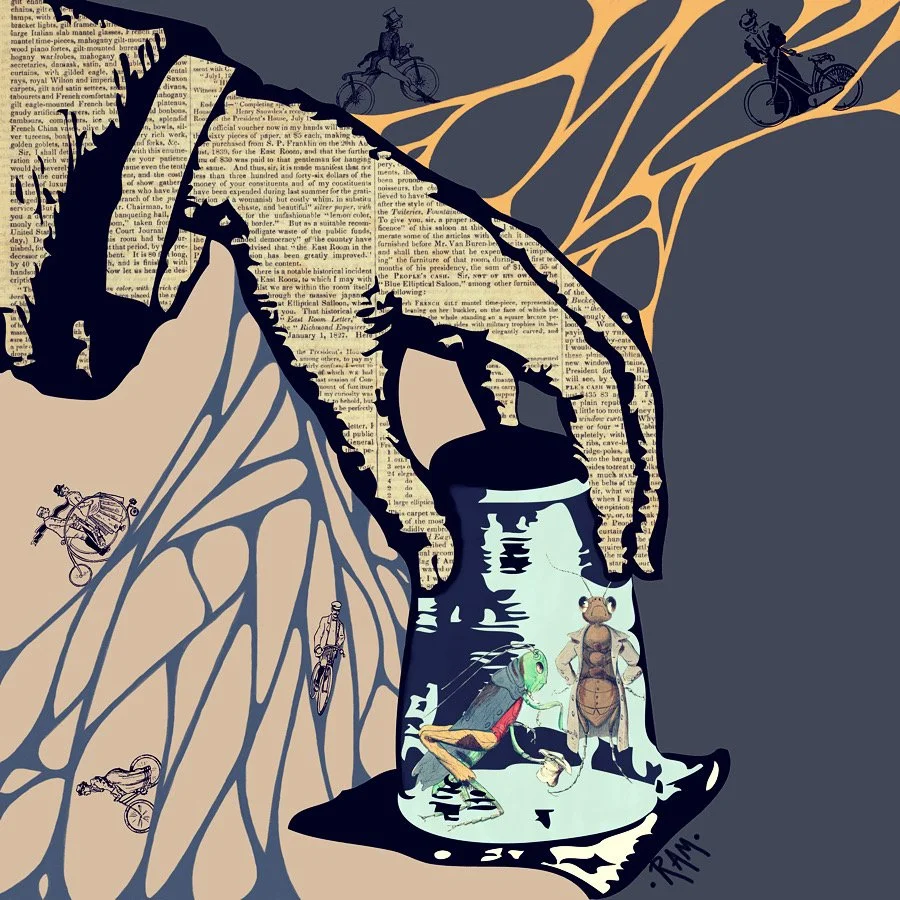
Release. Description: You capture some insects to release outside, but become intrigued. They begin to have personalities and names. They are now captive animals. You can't seem to let yourself put them outside again. You're too fond of them. They are trapped.
Artist: Gary Willis
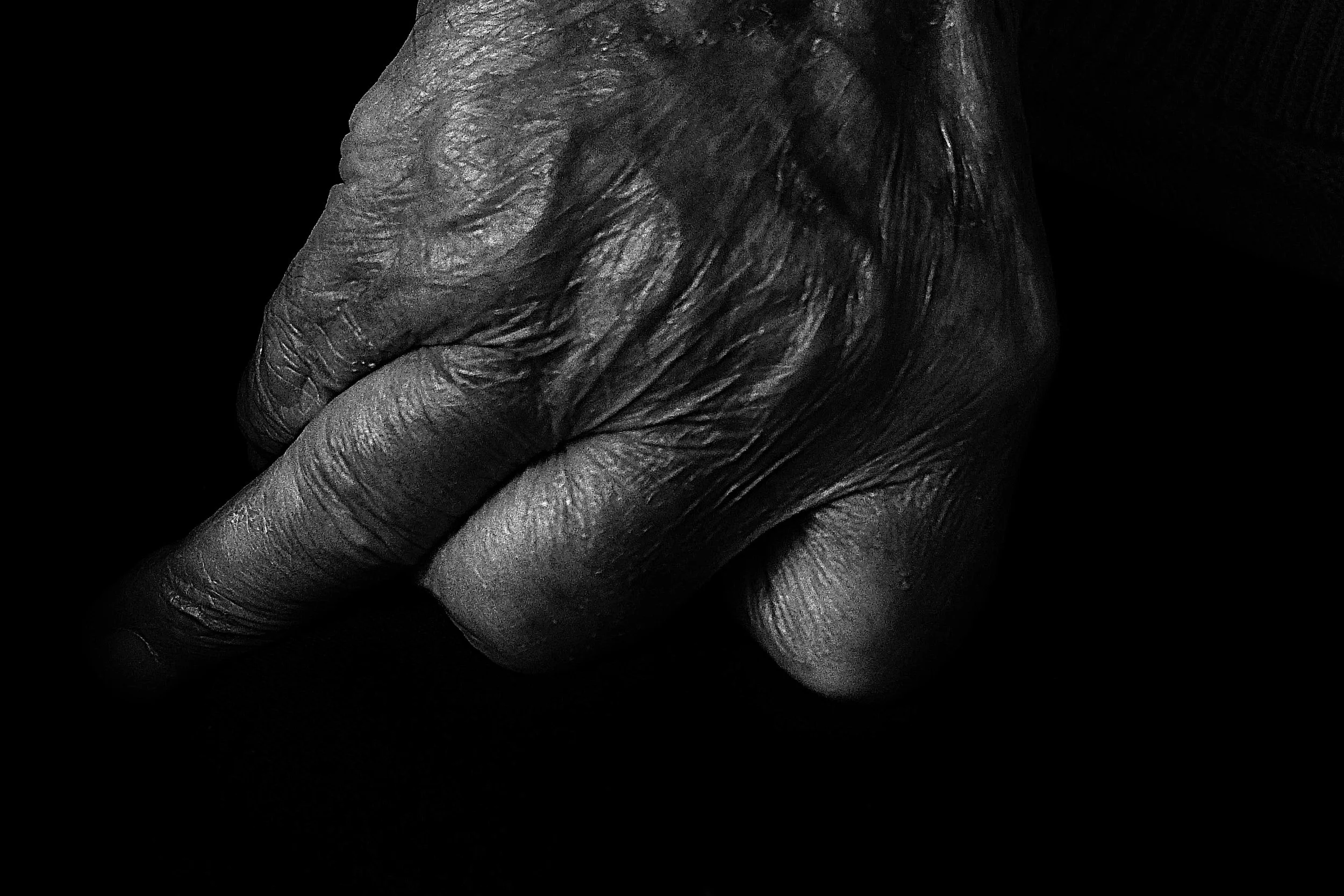
'When DID you last see your father?'
Description: Skin paper-thin. Fingers clench, A small gesture. Is it pain? Or a quiet ‘hello’ of recognition? Unknowingly, a last visit, A final ‘goodbye’ memory. From one of the last photographs taken of my father. Thank you, Dad x.
Artist - Nichola Rodgers
This new work is exhibited @treasurechestgallery
Where all the works are Small Acts
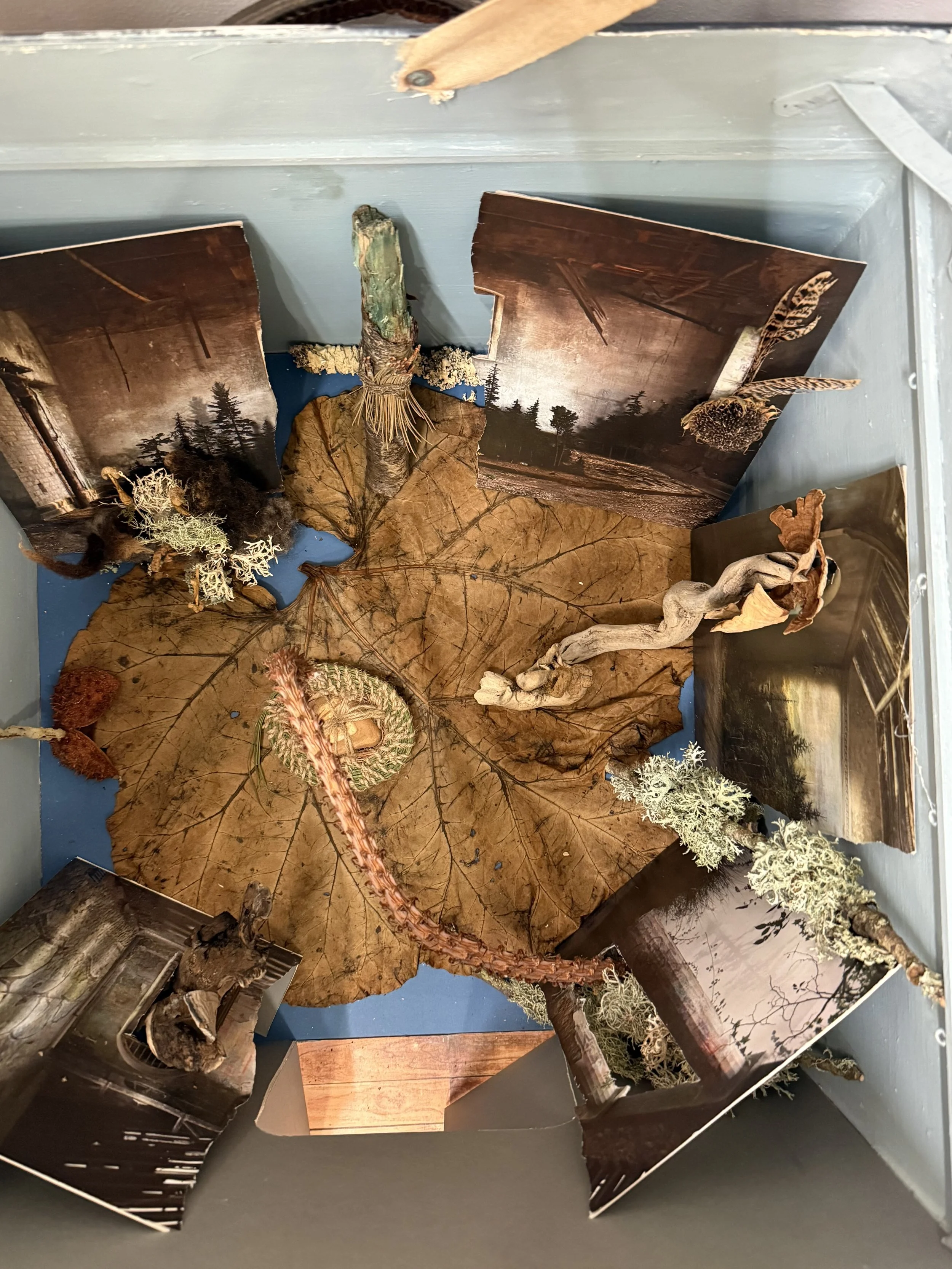
tudio as Habitat: The Micro-Wilderness
“Welcome to a world where the boundary between the maker and the landscape is blurred. This exhibition presents a series of miniature, handcrafted, three-dimensional ecosystems created within the confines of the artist’s studio in collaboration with nature’s natural beauty and ritual.
Traditionally, the studio is a place of human invention, artificial light, and raw materials. Here, however, that space has been reclaimed by the natural world. These dioramas explore the ‘micro-habitat, the self-contained environments that thrive in the forgotten corners of our world: the natural erosion of a hole in a stone and how that becomes a protective ritual called a hag stone, the miniature ecosystem within a rotted log, or a fleece caught up in bark. Or the ritual of weaving plants into twine, looking at how man built environments become ruins and new habitats for nature.
As you explore these scenes, consider the relationship between human creativity and ecological decay. Just as a sculptor shapes clay, nature shapes the environment. These scenes are ‘stages’ for nature, a juxtaposition of organic growth and artificial constraint.
This, then, is the Studio as Habitat: a place where artifice gives way to the wild, and where the smallest ecosystems remind us of the immense complexity of our planet.”
This micro environment can be seen at Lockwood Studios
Slyfield Industrial Estate
Guildford
Surrey
Artist: Jie Huang
www.jsusya.com
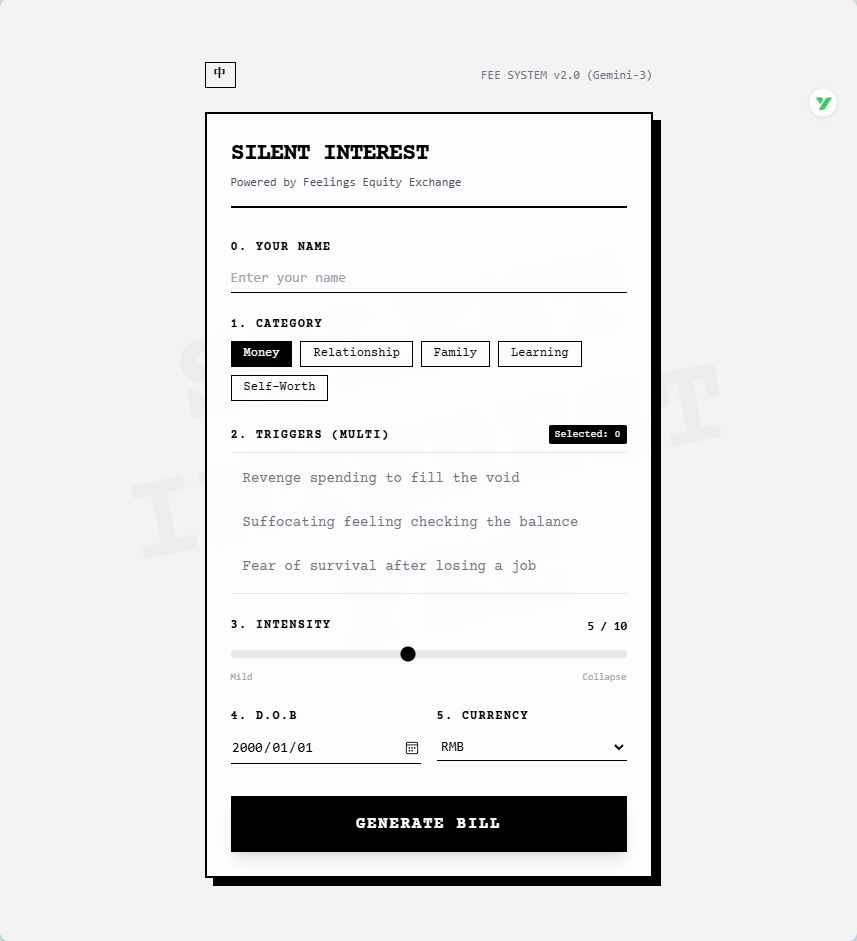
“Silent Interest” is an ongoing conceptual project that translates emotional experiences into the structure of a financial ledger. Inspired by the logic of compound interest, the work examines how subtle, often overlooked emotional moments accumulate over time, shaping an individual’s internal state without immediate visibility. Rather than focusing on dramatic events, Silent Interest records everyday emotional transactions — moments of restraint, encouragement, neglect, self-discipline, or quiet endurance. These experiences rarely produce instant consequences, yet they continue to accrue, much like interest in a silent account, gradually influencing behaviour, perception, and self-worth. The project adopts the visual and linguistic language of accounting — balance, income, expenditure, accumulation — to question how contemporary systems quantify value, productivity, and emotional stability. By reframing emotions as an invisible economy, the work exposes the tension between measurable systems and internal, non-quantifiable human states. Silent Interest does not seek emotional resolution or optimisation. Instead, it functions as a reflective mechanism, inviting viewers to confront the long-term impact of emotional governance, self-regulation, and societal expectations embedded within everyday life.
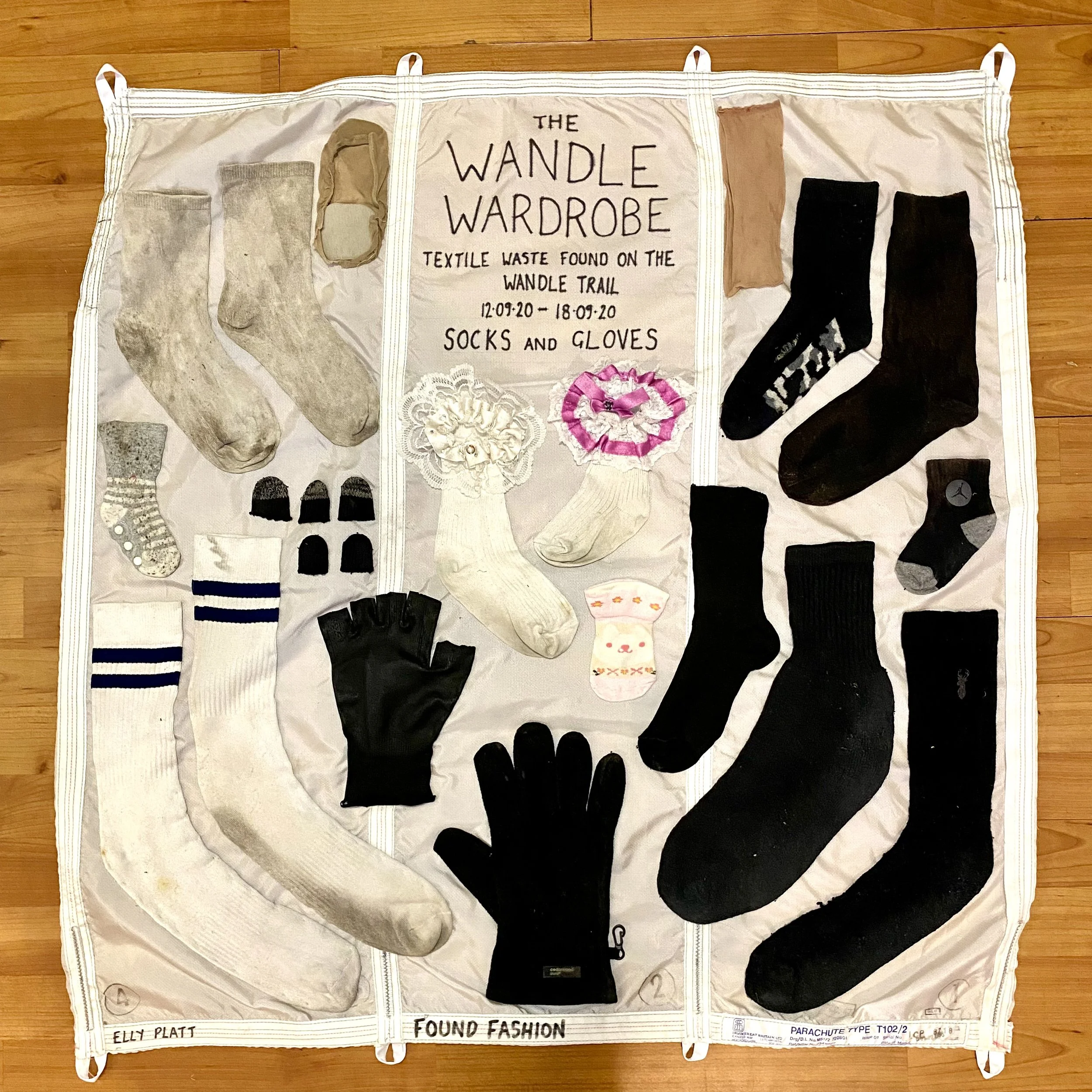
Artist: Elly Platt
www.takeitupwearitout
The Wandle Wardrobe: Found Fashion
Description: As an urban river, the Wandle has been woven into the fabric of local life for centuries. Once a site of textile production, the river was declared biologically “dead” in the 1960s, but was brought back to life by a grassroots campaign. Now a green and blue corridor through South London, the river was a lifeline for people during the 2020 pandemic, who found solace on the walking trail and a socially distanced community in the parks. Organised litter picks had been suspended, and I started to notice discarded clothes and scraps of textile waste on my daily walks. Over the course of several days, I walked the length of the 12-mile Wandle Trail, collecting all the items I could find. I carefully washed each scrap and lost sock and stitched them onto fabric panels inherited from a neighbour. These “quilts” are a record of the river’s 21st century textile legacy; a repository of evidence of our throwaway clothing culture. These quilts ask questions - in a society where clothing is so abundant and so cheap, have we lost our emotional connection to it? Would you retrace your steps to find a lost item of clothing, or is your time more valuable to you than your clothes? At what point do lost clothes become “rubbish”? They are also a reminder of our obligations to the ecosystems in which we live: an urban river is never going to be a pristine environment, but it’s our responsibility to collectively care for it (and so many local people do).